 codiflash
What Is an Intranet? Benefits, Features & How It Works
Learn what a corporate intranet is, how it works, and why companies rely on it for document management, internal communication, task management, and remote access.

When information gets lost in email threads
Here’s a scene you might recognize: someone on your team needs a vendor contract. They send an email. They wait. Someone tells them it’s in the shared folder. But which one? Last year’s or the updated one? There are three versions with different names and nobody knows which is the right one.
That moment of frustration — that absurd time sink — is exactly what a good intranet eliminates.
What is an intranet?
An intranet is a private, secure computer network that organizations use to let employees share information, collaborate on projects, and communicate internally. It uses the same technology as the global internet, but access is restricted exclusively to authorized users within the company.
Put simply: it’s like the internet, but just for your people.
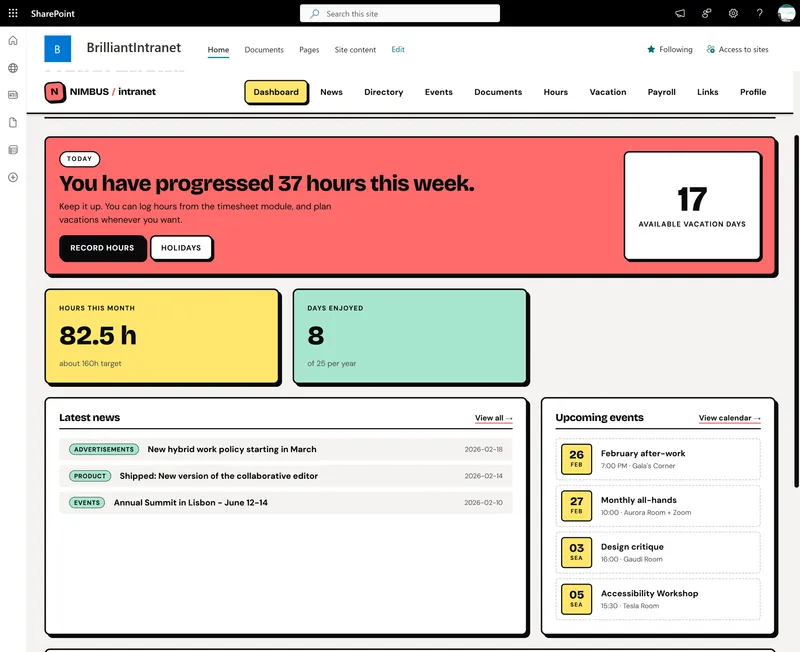
You don’t need to be a multinational to have one. Companies with 20 people benefit just as much from having a digital hub where everything is in its place, organized and easy to find. The scale changes — the need doesn’t.
How does an intranet work?
Technically, it works just like any website: servers, browsers, network protocols. The difference is that only people with valid credentials can access it. Nobody from outside can get in.
Modern intranets don’t rely on physical servers in the office anymore. Most are now cloud-hosted, meaning an employee can log in from home, from a hotel, from anywhere with an internet connection. No complicated VPNs, no calling IT every time.
What is a corporate intranet used for?
Corporate intranets are the digital hub of a company. They’re not just a file repository — they’re where the organization breathes, organizes itself, and communicates. These are the functions that deliver the most value:
Centralized repository
A secure place to find documents, policies, manuals, and forms. No duplicates, no orphaned versions. When someone updates a procedure, the whole company sees the correct version automatically.
This sounds simple, but in practice it changes everything. The hours wasted hunting for the right document are enormous — and that time has a real cost.
Task and project management
Well-designed intranets integrate tools for collaborative work: task assignment, project tracking, approval workflows. Instead of managing projects over email and waiting for replies that never come, everything is visible and traceable.
That’s the difference between a team that works together and one that works in parallel without coordinating.
Internal communication
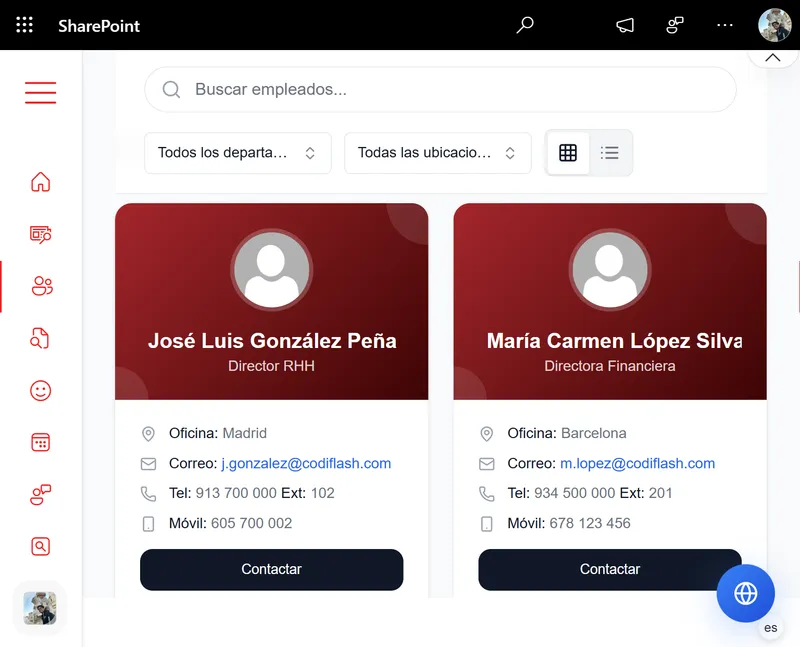
This is where the intranet really connects people. Company news, HR announcements, events, the employee directory — all in one place. No more hunting for someone’s email across six different lists, or finding out about an important announcement three days late.
A well-built people directory, for example, makes onboarding new employees so much smoother. They can see who’s who, what everyone does, and how to reach them.
Remote access from anywhere
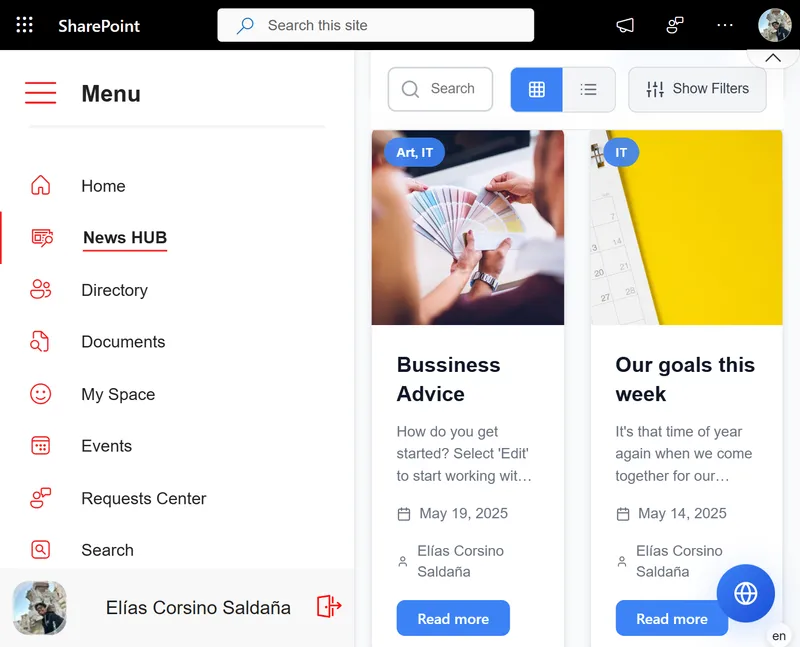
Because it’s cloud-based, the intranet doesn’t live just in the office. A salesperson on the road, someone working from home, an executive at a client site — everyone accesses the same up-to-date information. No friction, no waiting until you’re back at the office.
This isn’t a post-pandemic luxury. It’s an operational necessity for any company with people who move around.
Why don’t more companies have a proper intranet?
Honestly? Because for years it was expensive and complicated. It required custom development, in-house servers, and constant maintenance. Intranets from ten years ago were slow, ugly, and nobody used them.
But that changed. Platforms like SharePoint have made it possible for companies of any size to have a modern, functional intranet that integrates with the tools their team already uses. For a deeper look at how these platforms optimize work, check out specialized resources like Powell Software’s guide or Bloomfire’s analysis.
What you actually gain when your intranet works
It’s not just tidy information. It’s something more. People stop wasting time looking for things that already exist. New employees find what they need without bothering anyone. Important announcements actually reach everyone — not just the people who were in the meeting.
Less friction. More focus on what actually matters.
If your company is still managing information through email and unstructured shared drives, it might be time to consider something better. You don’t need a massive digital transformation. Often, a well-designed intranet is the most sensible first step.
Want to build an intranet tailored to your company? Tell us what you need and we’ll figure it out together.